Jera Value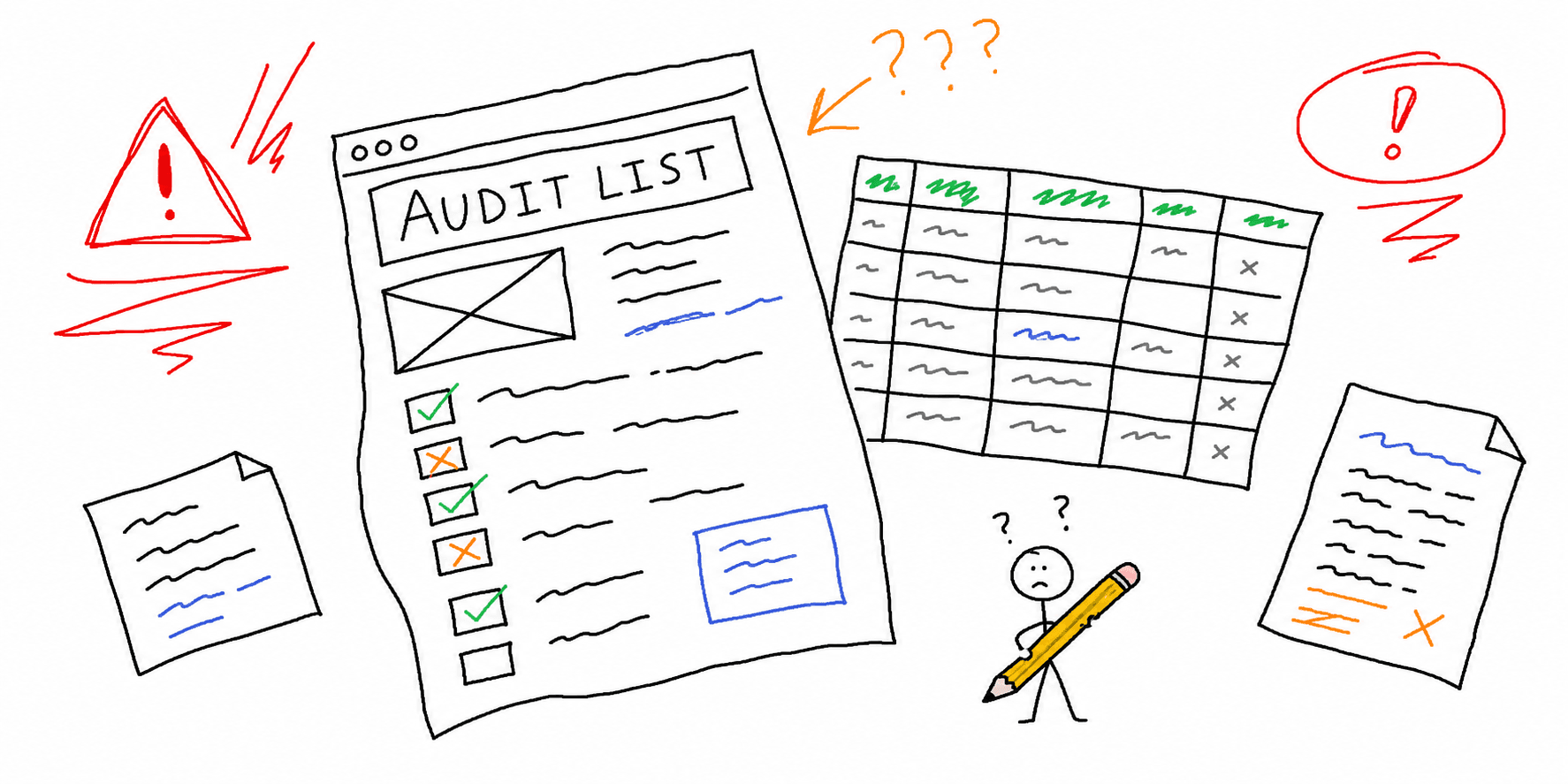

A website content checklist and content audit template give you a repeatable way to decide what to keep, update, merge, or remove. Instead of guessing, you score each page and prioritize work that can move traffic and conversions.
If you need fast page-level diagnostics while you audit, run URLs through the content audit tool. For technical context, pair it with the SEO audit tool.
Website Content Checklist (Quick Pass)
Use this quick website content checklist before your deeper audit spreadsheet pass:
- Every important URL has one clear primary keyword and one intent type.
- Top pages have a unique H1 and title tag aligned with search intent.
- Thin pages (<500 words) are marked for expansion, merge, or removal.
- Outdated pages include a concrete refresh plan and owner.
- Pages with traffic but low CTR are flagged for title/meta rewrites.
- Pages with traffic but weak conversions have CTA and copy updates scoped.
- Internal links point users to the next step in the journey.
- Orphan pages are identified and linked from relevant hubs.
- Cannibalizing pages are grouped into merge/redirect decisions.
- High-priority pages are checked in Website Content Analysis and SEO On-Page Analysis.
- Content update candidates link to Website Audit Checklist and Website Launch Checklist workflows.
- Final owners and due dates are assigned before the sprint closes.
If you want a reusable sheet, keep reading for the full checklist for website content template and scoring rubric.
Content Inventory vs Content Audit
- A content inventory is a list of all your URLs and page metadata.
- A content audit adds quality and performance analysis so you can make decisions.
If your list is not ready yet, start with:
When to run a website content audit
Run one when:
- Traffic has plateaued or declined.
- You are planning a redesign or migration.
- Multiple pages target similar queries and compete with each other.
- Conversion pages have high traffic but low conversion rate.
- Posts have not been updated in 6-12 months.
Content Audit Template (Copy/Paste Columns)
Use these columns in Google Sheets, Notion, or Airtable.
| Column | What to capture |
|---|---|
| URL | Canonical URL only (no tracking params) |
| Page type | Blog, landing page, docs, product, etc. |
| Primary keyword | Main query the page should rank for |
| Search intent | Informational, commercial, transactional, navigational |
| Sessions (90d) | Organic sessions in the last 90 days |
| Conversions (90d) | Leads, trials, sales, demo requests |
| CTR + avg rank | From Search Console |
| Last updated | Date content was meaningfully updated |
| Content quality score | 0-100 score using the rubric below |
| Action | Keep, Update, Merge, Remove |
| Target URL (if merging) | Canonical page to consolidate into |
| Internal links to add | Hub and related pages to link from this page |
| Owner + due date | Person responsible and deadline |
| Notes | Specific edits needed (title, intro, missing sections, outdated claims, etc.) |
Starter row (example)
URL,Page type,Primary keyword,Search intent,Sessions (90d),Conversions (90d),CTR + avg rank,Last updated,Content quality score,Action,Target URL (if merging),Internal links to add,Owner + due date,Notes
/blog/example-post,Blog,content audit template,Informational,420,9,"2.4% / #18",2025-05-15,62,Update,,"/blog/content-inventory; /landing/content-audit-tool","Maya - 2026-03-01","Rewrite intro for intent match, add checklist, update examples"
Scoring Rubric (0-100)
Score each page consistently:
| Dimension | Points | What "good" looks like |
|---|---|---|
| Intent match | 0-20 | Intro and structure match what searchers expect for the keyword |
| Topical depth | 0-20 | Covers key subtopics, examples, and implementation details |
| Freshness and accuracy | 0-15 | Claims and screenshots are current; outdated tactics removed |
| On-page SEO quality | 0-15 | Strong title/H1 alignment, clear headings, useful internal links |
| Conversion clarity | 0-15 | CTA is specific and relevant to intent |
| Effort-to-impact opportunity | 0-15 | Clear, realistic improvements that can increase traffic or conversions quickly |
Action thresholds:
- 80-100: Keep and monitor
- 60-79: Update this quarter
- 40-59: Merge or major rewrite
- 0-39: Remove or redirect
Website Content Audit Checklist
- Export all indexable URLs from crawler/CMS
- Normalize canonical URLs and remove duplicates
- Map one primary keyword per page
- Pull 90-day traffic, CTR, rank, and conversion data
- Score each page with the same rubric
- Label action: keep, update, merge, remove
- Add internal-link opportunities for every "update" page
- Add owner + due date so work gets shipped
Workflow: From Audit to Shipped Improvements
-
Start with revenue-adjacent pages first. Focus on pages that already drive pipeline or high-intent traffic.
-
Fix intent mismatch before adding words. If the query is template/checklist intent, provide copy/paste assets early on the page.
-
Consolidate overlap. If two pages target the same query family, keep the stronger URL and redirect the weaker one.
-
Refresh high-leverage sections. Update intros, add examples, improve headings, and tighten CTAs.
-
Strengthen internal links. Point updated blog posts to relevant landing pages and cluster posts.
-
Re-index and monitor for 4-6 weeks. Track position, CTR, and assisted conversions before making another major rewrite.
Internal Linking Pattern That Works
For this topic cluster:
- Link to process pages: Website audit checklist
- Link to content inventory assets: Content inventory template
- Link to implementation tool pages: Content audit tool, Website content analysis, SEO on-page analysis
This helps users move from education to action, and it helps search engines understand topic relationships.
Common Mistakes to Avoid
- Auditing everything at once and shipping nothing.
- Tracking vanity metrics without linking them to page actions.
- Ignoring intent mismatch (for example, writing essays for template keywords).
- Leaving merge decisions unredirected, which splits rankings across URLs.
- Skipping internal links after updates.
Related Resources
- Content inventory
- Content inventory example
- Content inventory tools
- Website audit report template
- Website conversion optimization
Final Thoughts
A strong content audit template does not need to be complicated. It needs to be consistent, prioritized, and tied to action. Use the sheet, score honestly, ship updates weekly, and route implementation pages to the right Roast My Web tools so content work translates into business impact.