Jera Value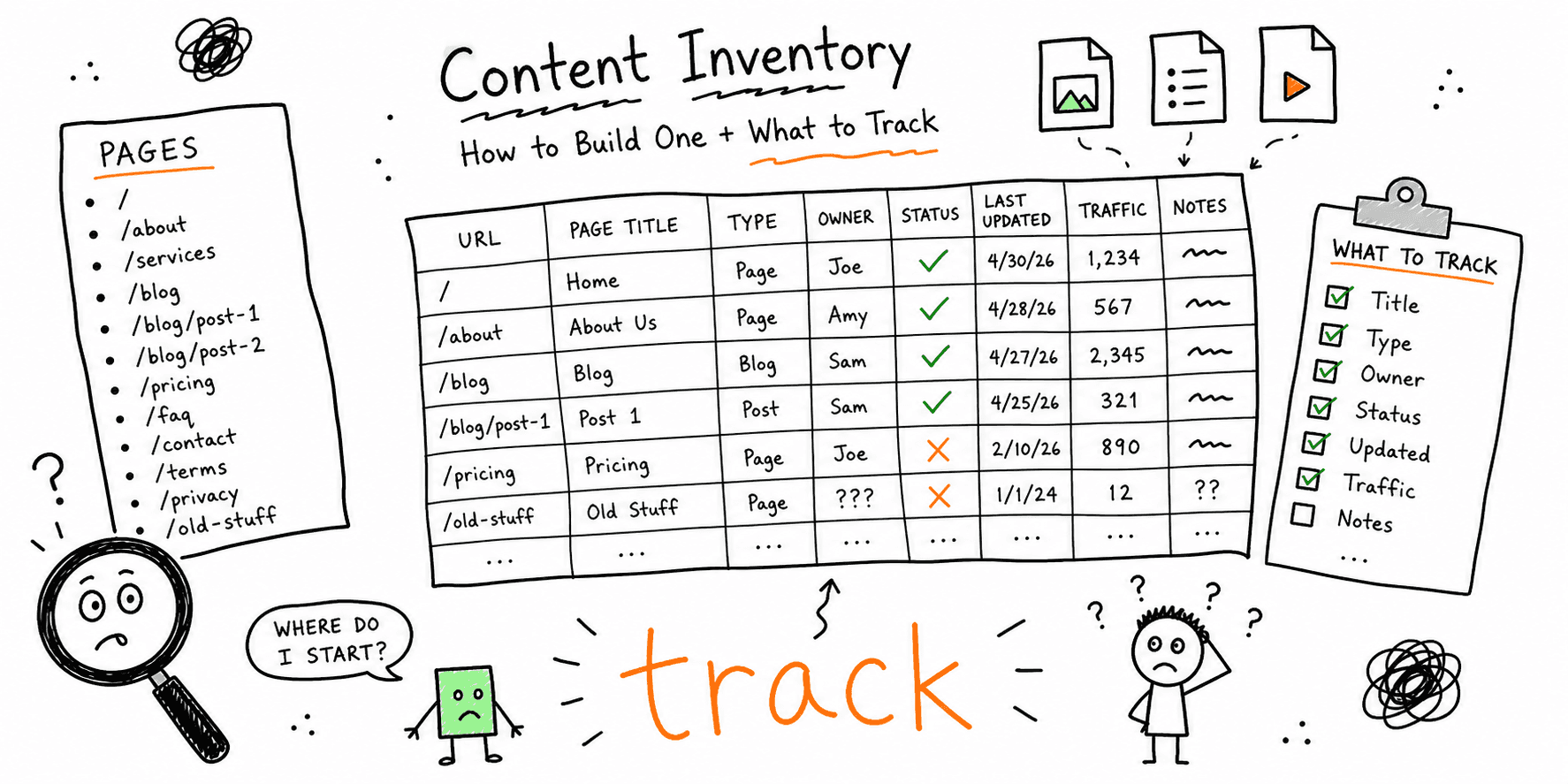

A content inventory is a structured list of every page, asset, and content type on your site. It helps you understand what you have, what is outdated, and what should be improved or removed. If you are planning a redesign, SEO refresh, or content audit, start with a content inventory.
Need page-level insights quickly? Use the content audit tool or the SEO audit tool.
What is a content inventory?
A content inventory is a catalog of your content, usually stored in a spreadsheet. It includes URLs, titles, metadata, and key performance signals so you can evaluate each page objectively.
A web content inventory is the same idea applied to the full site: every URL that can be crawled, including landing pages, blog posts, help docs, and resource hubs.
Why a content inventory matters
- SEO clarity: know which pages should rank and which are duplicates.
- Content planning: see gaps and overlap across topics.
- UX consistency: find broken or outdated paths.
- Migration safety: map old URLs to new ones.
What to include in a content inventory
At minimum, track:
- URL
- Page title
- Content type (blog, landing, doc)
- Primary keyword or topic
- Publish date or last updated
- Status (keep, update, merge, remove)
Optional but useful:
- Traffic (sessions)
- Conversions
- Backlinks or referring domains
- Content owner
- Notes or recommendations
Content inventory checklist (quick)
- Crawl the site to export all indexable URLs
- Remove duplicate URLs or parameters
- Add titles and content types
- Tag each page with a primary topic
- Mark keep, update, merge, or remove
How to build a content inventory (step-by-step)
- Export all URLs (crawl with a tool or use your CMS export).
- Normalize the list (remove parameters, duplicates, and staging URLs).
- Add metadata (title, content type, publish date).
- Add performance data (traffic, conversions, backlinks).
- Assign actions (keep, update, merge, remove).
What to do after the inventory
Turn the inventory into a content audit. Prioritize updates by impact and effort. Use the content audit tool to spot clarity gaps and on-page SEO issues.
Related resources
Final thoughts
A content inventory gives you control over your site. It is the foundation of SEO cleanup, content planning, and safe migrations.