Jera Value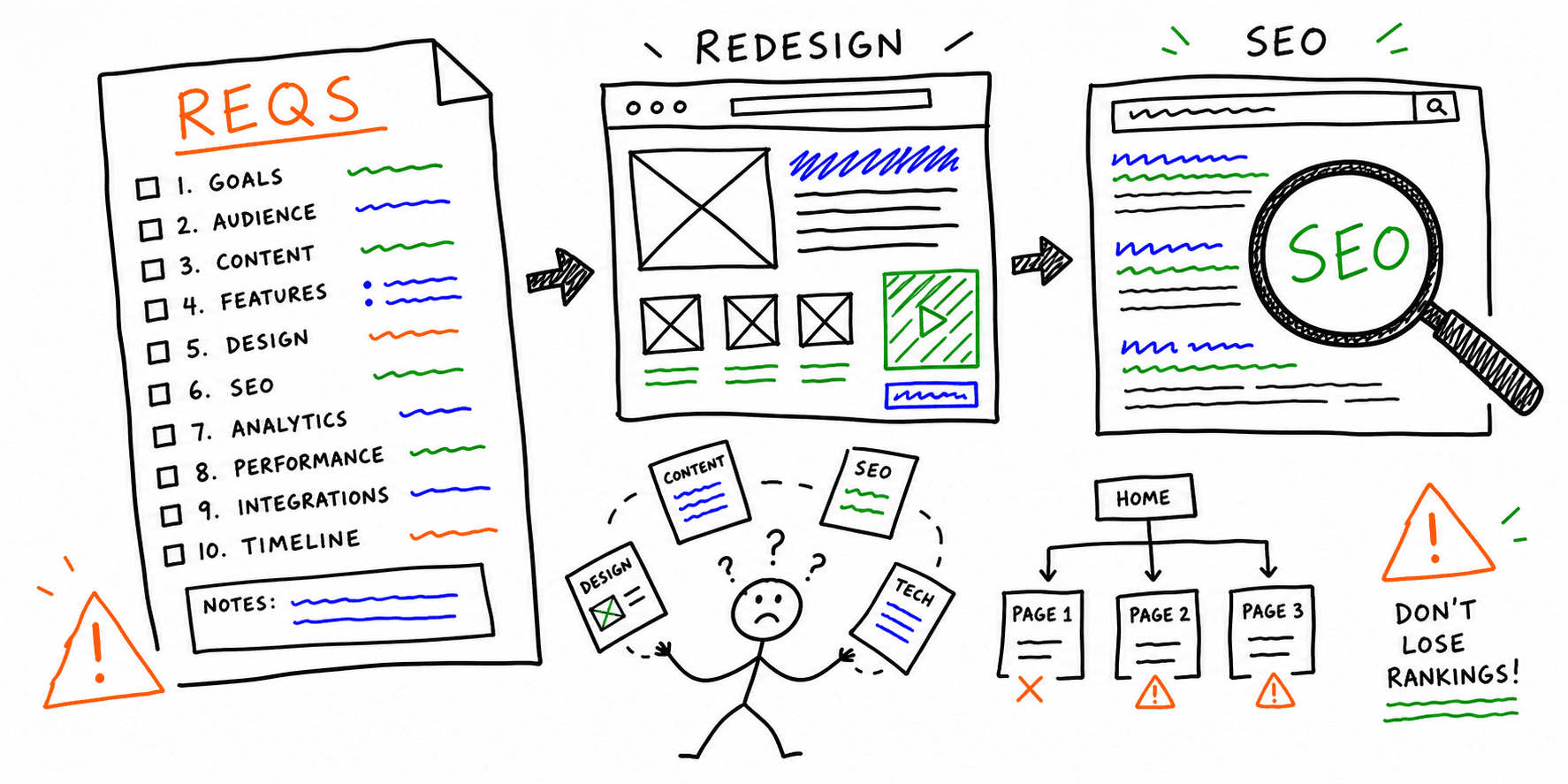

Website redesign requirements define what must be included before design or development begins. Use this redesign website checklist to avoid missed pages, broken SEO, and unclear success metrics during launch.
Need an audit to inform requirements? Use the website audit tool or website UX audit.
Website redesign requirements checklist
Goals and scope
- Primary goal (leads, sales, signups)
- Target audience and positioning
- Pages included and excluded
- Success metrics and KPIs
Content and SEO
- Content inventory completed
- Primary keywords by page
- Redirect plan for URL changes
- Metadata and heading structure plan
- SEO owner assigned for launch week
UX and design
- Information architecture and sitemap
- Wireframes for key pages
- Design system or style guide
- Accessibility targets (WCAG)
Technical requirements
- Platform or CMS decision
- Performance targets (Core Web Vitals)
- Integrations (CRM, analytics, payments)
- Tracking and events plan
Launch readiness
- QA checklist
- Analytics verification
- Backup and rollback plan
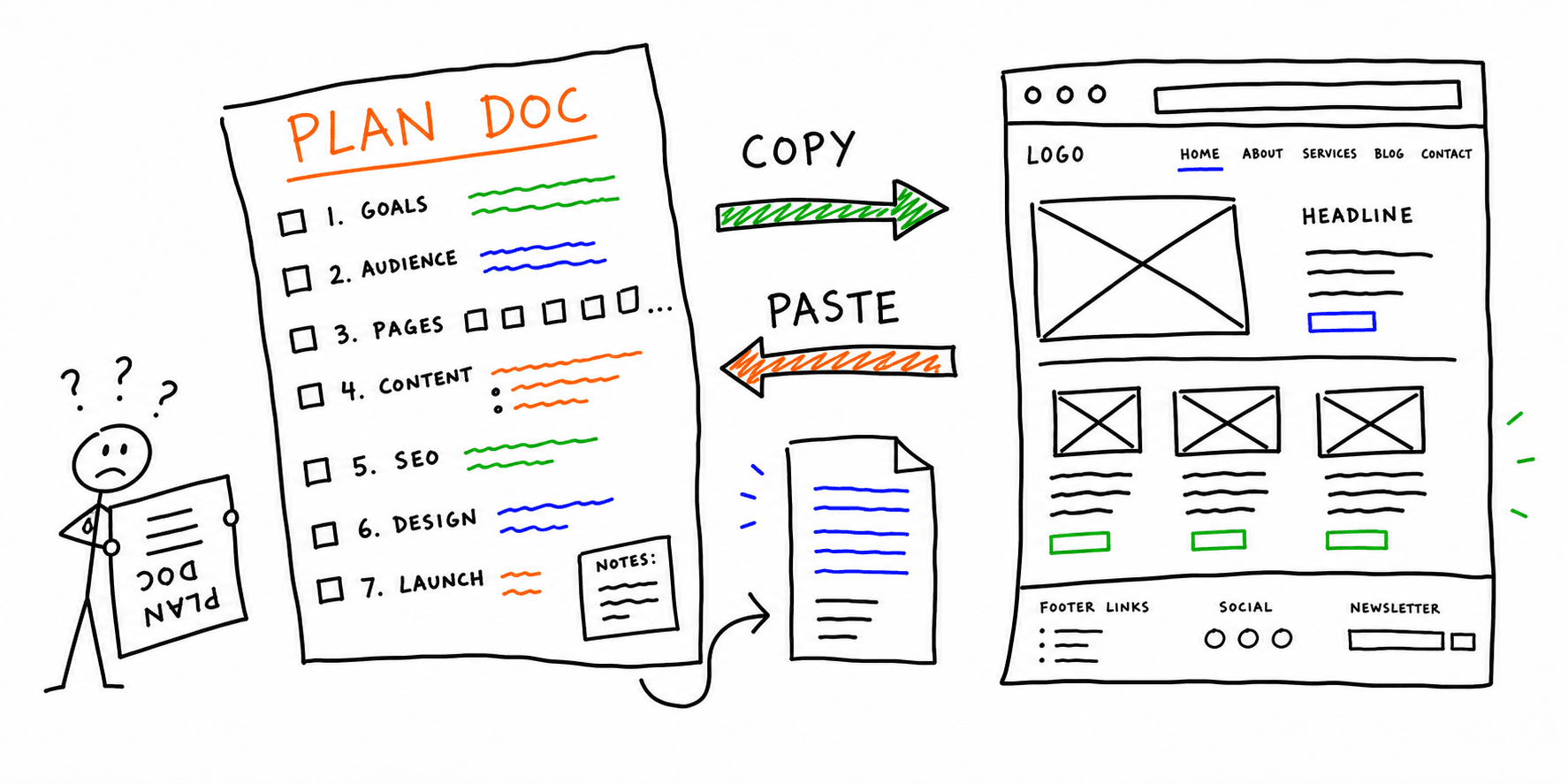
Redesign website checklist template (copy/paste)
Use this template in Notion, Sheets, or ClickUp to assign owners and due dates.
| Workstream | Requirement | Owner | Priority | Due date | Status |
|---|---|---|---|---|---|
| Goals | KPI baseline approved | Growth lead | High | ☐ | |
| Content | Content inventory and page owners confirmed | Content lead | High | ☐ | |
| SEO | Old URL -> new URL redirect map complete | SEO lead | High | ☐ | |
| UX | Key user flows validated with quick testing | UX lead | Medium | ☐ | |
| Design | Core templates approved | Design lead | Medium | ☐ | |
| Dev | Canonical/meta/structured data parity checks | Engineering lead | High | ☐ | |
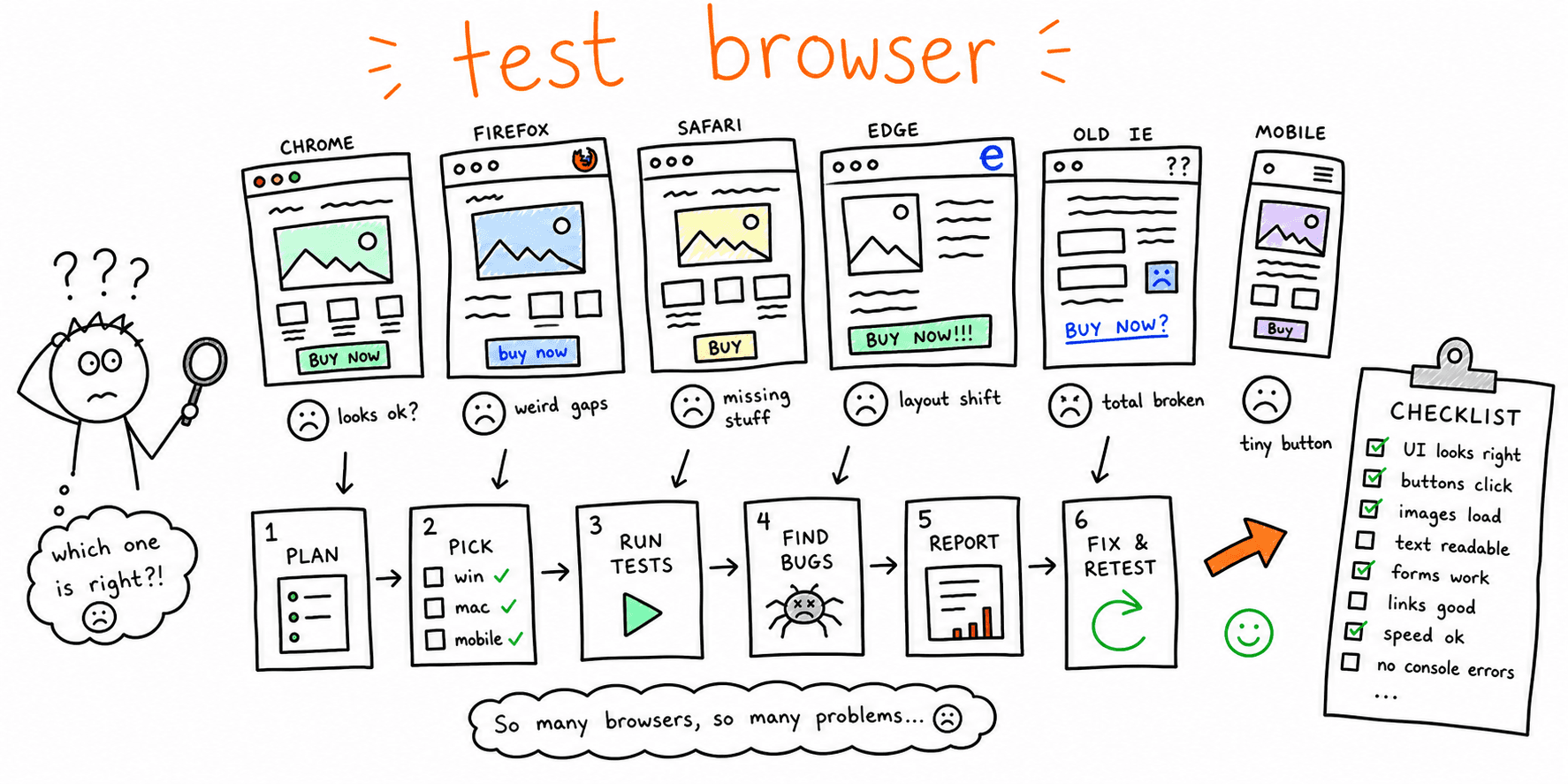
| QA | Cross-browser/device test pass | QA lead | High | ☐ | |
| Launch | Rollback plan and escalation owners assigned | PM | High | ☐ |
Pair this with the website planning template, website wireframe template, and website launch checklist so requirements, design, and release checks stay in one workflow.
SEO checklist for website redesign
If you are migrating templates, URLs, or CMS logic, treat SEO as a separate launch track. This SEO checklist for website redesign helps keep organic traffic stable while the new site goes live.
Phase 1: Before design and development
- Export top landing pages, rankings, and queries from Search Console
- Identify revenue-critical URLs (pricing, demo, signup, product pages)
- Build a page-level keyword map for old URL -> new URL
- Snapshot current metadata (title, H1, meta description, canonical)
- Confirm internal-link hubs you cannot afford to break
Need a baseline before mapping URLs? Run a website SEO audit checklist and technical SEO audit.
Phase 2: During build on staging
- Keep staging blocked from indexing (
noindexand auth where possible) - Preserve heading hierarchy and canonical tags on key templates
- Validate structured data parity on high-intent pages
- Prebuild 301 redirects for every changed URL
- Verify nav/footer links to protect crawl paths
For a reusable review flow, use this website audit checklist before each release candidate.
Phase 3: Pre-launch and first 14 days
- Crawl old and new site, then diff status codes and canonicals
- Test redirect chains and remove 302s on permanent moves
- Regenerate XML sitemap and submit in Search Console
- Re-annotate analytics events and conversion goals
- Monitor indexing, 404s, and top-page rank movement daily
Use the SEO audit checklist tool, technical SEO checklist, and site health check to catch launch regressions quickly.
Quick pre-launch SEO sign-off table
| Check | Owner | Status |
|---|---|---|
| Old-to-new URL redirect map approved | SEO lead | ☐ |
| Canonical tags match intended index URLs | Dev/SEO | ☐ |
| Noindex removed from production templates | Dev | ☐ |
| XML sitemap submitted and fetchable | SEO | ☐ |
| Core templates pass CWV targets | Performance | ☐ |
Pair this with your website launch checklist so SEO, QA, and analytics sign-off happen in the same release checklist.
Common requirements that get missed
- 301 redirect mapping for old URLs
- Content ownership and review workflow
- Mobile-first performance checks
- Post-launch monitoring plan
Which redesign guide should you use?
- Use this page when you need requirement-level checklists and SEO launch controls.
- Use website redesign strategy when you're comparing services, packages, process, and project timeline.
- Use website redesign proposal template when you need stakeholder sign-off on scope and budget.
Related resources
- Website redesign proposal template
- Website redesign strategy
- Content inventory guide
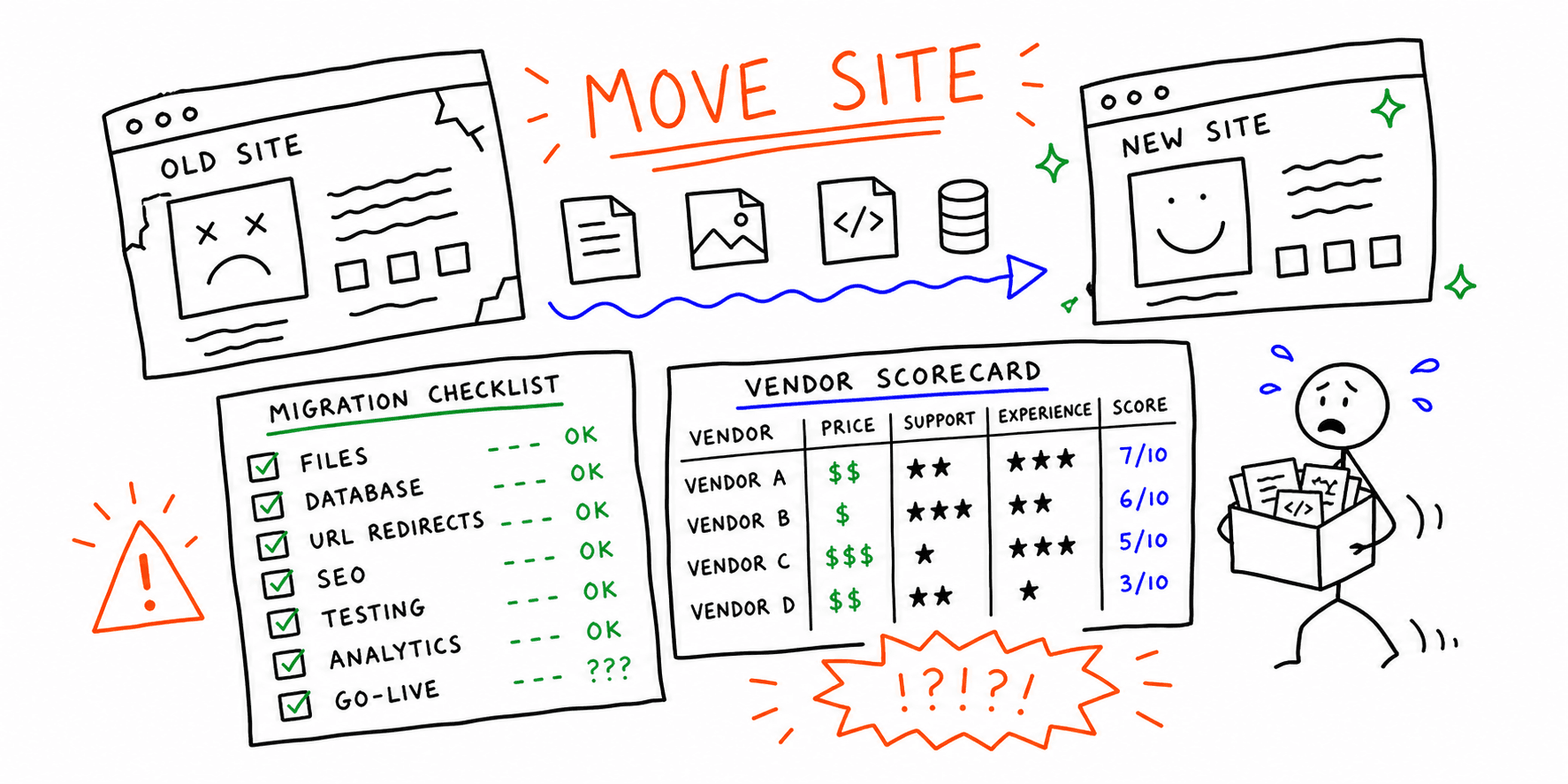
- Website migration service guide
Final thoughts
Clear website redesign requirements prevent scope drift and protect SEO. Use the checklist above, assign owners, and run the website redesign SEO checklist before and after launch.