Jera Value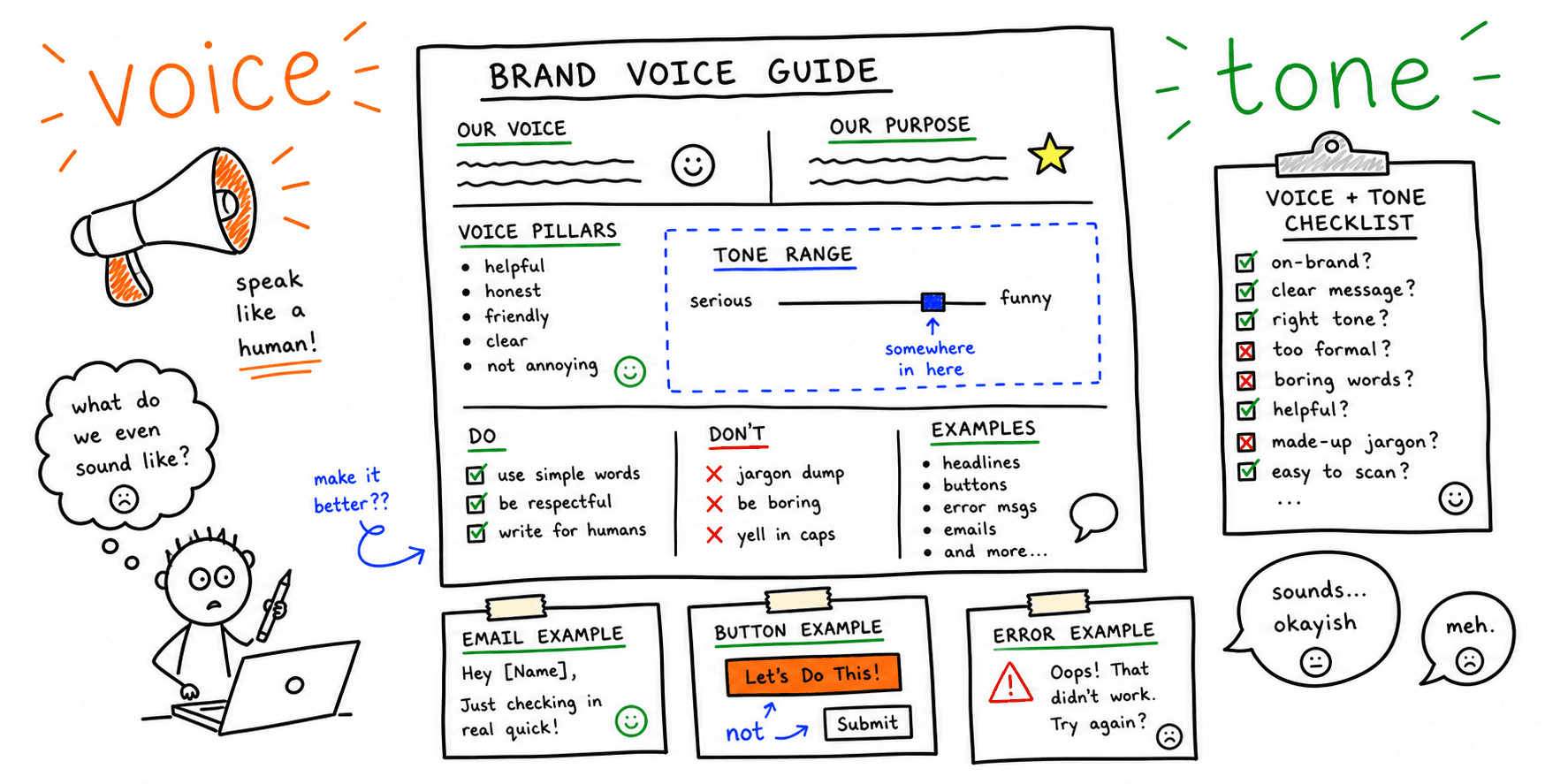

A voice and tone guide keeps brand language consistent across channels. This template helps you define principles, examples, and dos and don'ts.
What you'll get:
- A voice and tone checklist
- A copy/paste guide template
- Practical examples to clarify tone
Use the sections below as building blocks; keep what you need and delete the rest.
For UI copy hygiene, use the UX writing checklist.
References for this guide are listed at the end.
Voice vs tone (simple definition)
Voice is your brand personality. It stays consistent. Tone is how that voice adapts to the situation and the user mindset.
Why a voice and tone guide matters
A guide helps you:
- Keep writing consistent across channels and teams
- Adapt tone to different contexts without losing your voice
- Give teams clear examples of what to do and what to avoid
Core elements of a voice and tone guide
A solid guide usually includes:
- Voice traits (what stays consistent)
- Tone rules (how voice adapts by context)
- Channel list (where tone shifts are allowed)
- Dos and don'ts with examples
- Sample copy for common situations
Voice and tone checklist
Use this checklist to review your guide.
Voice clarity
- Voice traits are defined in plain language
- Traits are specific (not vague like "authentic")
- Voice matches the brand mission and values
Tone flexibility
- Tone changes by context and audience
- Emotional situations have clear guidance
- Tone remains consistent across channels
Writing style
- Copy is clear and concise
- Language is everyday and easy to understand
- Calls to action are obvious
Global and inclusive writing
- Avoid slang and culturally specific references
- Keep tone friendly and respectful
- Write in a way that works for non-native readers
Voice and tone guide template (copy/paste)
1. Brand voice traits
List 3 to 5 traits and define them.
| Trait | What it means | What it does not mean |
|---|---|---|
| Helpful | Clear guidance and empathy | Wordy or overly casual |
| Confident | Direct and decisive | Pushy or arrogant |
2. Tone matrix by context
| Context | User emotion | Tone | Notes |
|---|---|---|---|
| Error message | Frustrated | Calm, reassuring | Focus on recovery steps |
| Onboarding | Curious | Friendly, clear | Emphasize value |
| Billing issue | Anxious | Respectful, direct | Avoid humor |
3. Channel guidance
List channels and how tone shifts per channel.
| Channel | Tone emphasis | Example |
|---|---|---|
| Product UI | Clear and concise | "Save changes" |
| Friendly and helpful | "Want a quick recap?" | |
| Social | More playful | "We fixed it. You are welcome." |
4. Dos and don'ts
| Do | Don't |
|---|---|
| Use short, direct sentences | Use jargon or buzzwords |
| Front-load the key message | Bury the action in the last line |
| Keep tone human and respectful | Use slang or inside jokes |
5. Example library
Add examples for common flows:
- Signup
- Error state
- Confirmation
- Cancellation
- Support reply
Tone dimensions (optional framework)
Nielsen Norman Group defines four tone dimensions:
- Formal vs casual
- Serious vs funny
- Respectful vs irreverent
- Enthusiastic vs matter-of-fact
Use these dimensions to map your tone choices.
Example (short)
Voice traits: clear, warm, expert.
Tone rule: When users are stressed (errors, billing), keep tone calm and direct.
Example error copy:
"We could not process your payment. Check the card details or try another card."
FAQ
Do we need separate guides for voice and tone?
No. A single guide should explain both the stable voice and the context-based tone shifts.
How many voice traits should we choose?
Keep it to a small set so teams can remember and apply them consistently.
How do we keep the guide useful?
Keep it short, add examples, and update it when channels or products change.
References
- Mailchimp — Voice And Tone
- Google Developer — Tone
- MOO — How To Write Your Tone Of Voice Guidelines
- Nielsen Norman Group — Tone Of Voice Dimensions
- Texas State University — Voice And Tone
- Lokalise — How To Adapt Your Tone Of Voice For New Markets