Jera Value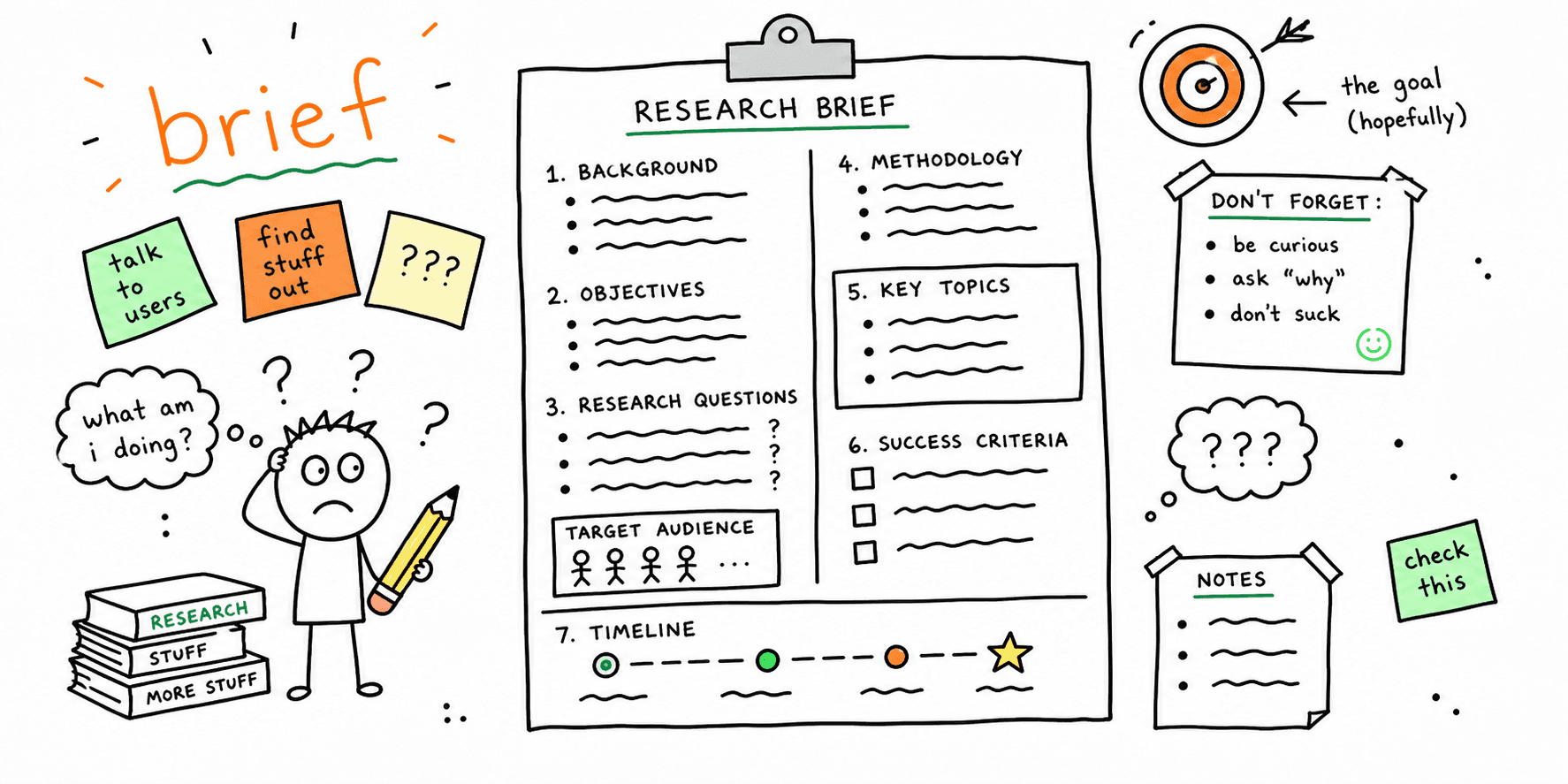

A research brief aligns stakeholders on why the study matters and what it should answer. This template keeps scope, goals, and logistics clear from the start.
What you'll get:
- A copy/paste research brief template
- A quick checklist
- A short example
Use the sections below as building blocks; keep what you need and delete the rest.
Once the brief is approved, move into the UX research plan template.
References for this guide are listed at the end.
What is a research brief?
A research brief is a document that gives a researcher or agency clear direction on what is needed and why. It provides context, objectives, and expectations so the research can deliver useful outcomes.
Why use a research brief?
Briefs reduce confusion, limit back-and-forth, and improve the quality of results. They help you define objectives, audience, and constraints before research begins.
What to include in a research brief
Most briefs cover:
- Background and context
- Research objectives and questions
- Target audience
- Methodology (if you have a preference)
- Deliverables and outputs
- Timeline and key milestones
- Budget and constraints
- Contacts and responsibilities
Research brief template (copy/paste)
1. Project background
- Organization or product:
- Context and problem:
- Why now:
2. Objectives and research questions
- Research objectives:
- Key questions to answer:
- Decisions this research will inform:
3. Target audience
- Who we need to learn from:
- Key behaviors or segments:
- Inclusion and exclusion criteria:
4. Methodology (optional)
- Preferred methods:
- If open to recommendations, note that here:
5. Logistics
- Recruitment owner:
- Tools or platforms:
- Incentives:
- Stakeholder access:
6. Deliverables
- Expected outputs (report, deck, data):
- Format and level of detail:
- Review cycles:
7. Timeline and budget
- Start date:
- Key milestones:
- Final delivery date:
- Budget range:
8. Contacts and approvals
- Primary contact:
- Decision makers:
- Reviewers:
9. Risks and constraints
- Known risks:
- Out of scope:
Mini example (filled in)
Project background: Improve onboarding for a B2B dashboard
Objective: Understand where new users stall and why
Audience: New trial users and team admins
Method: Interviews plus a short survey
Deliverables: Summary report with prioritized fixes
Timeline: 3 weeks from kickoff to final report
Budget: $8,000
Research brief checklist
- Context and purpose are clear
- Objectives and questions are specific
- Target audience is defined
- Timeline and budget are set
- Deliverables are defined
- Contacts and responsibilities are listed
Common mistakes to avoid
- Vague objectives that lead to unfocused findings
- Too much jargon without context
- Missing budget or timelines
- Overly prescriptive methods with no flexibility
FAQ
How detailed should a research brief be?
It should be thorough but concise so key information is not buried.
Should you include methodology?
Include it if you are sure about the approach. Otherwise note that you are open to recommendations.
Who should help create the brief?
UXinsight recommends filling it out with your team, clients, and stakeholders to align early.
Why include budget and timing?
Research by Design notes that budget and timing shape the proposed approach and feasibility.
References
- IFF Research — How To Write An Effective Research Brief
- Research by Design — How To Structure A Good Research Brief
- Conjointly — Market Research Brief
- UXinsight — UX Research Briefing Template
- CultureHive — Research Brief Samples
Related resources
- UX research plan template
- User interview template
- User persona template
- Usability testing template
- UX audit template
If you want a fast UX review for a specific page, start here: Website UX Audit
Want client-ready UX findings in minutes? Roast My Web generates branded PDF audit reports with prioritized UX, conversion, and SEO fixes.