Jera Value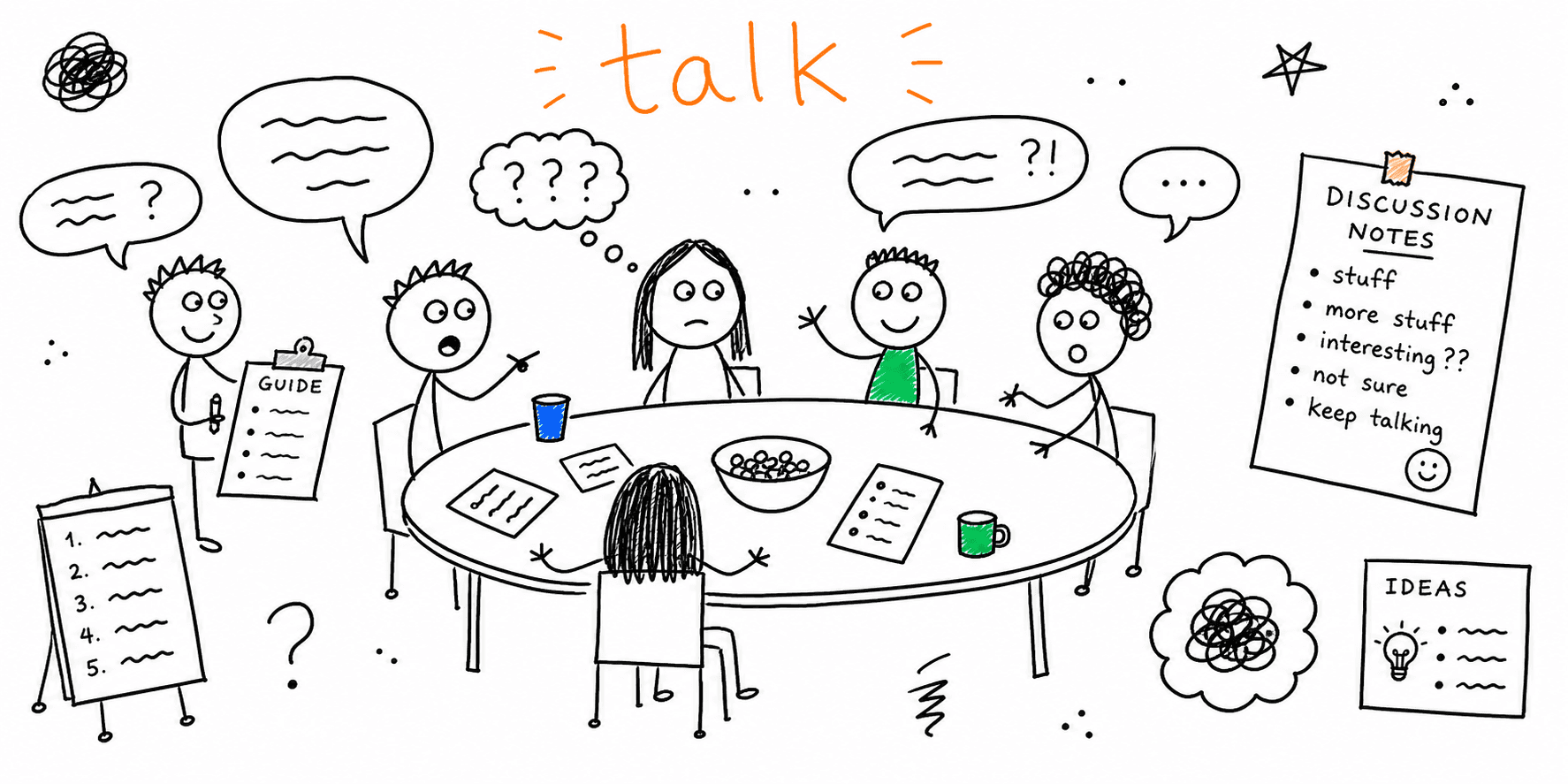

A discussion guide keeps focus groups structured while leaving room for real conversation. Use this template to run sessions smoothly and capture comparable insights.
What you'll get:
- A copy/paste focus group discussion guide template
- A question bank with examples
- A checklist and mini example
Use the sections below as building blocks; keep what you need and delete the rest.
Screen participants with the user research screener template.
References for this guide are listed at the end.
What is a focus group discussion guide?
Looppanel describes a discussion guide as a structured document that outlines questions, topics, and prompts, but not a rigid script. Insight7 notes a guide keeps sessions focused while allowing natural dialogue.
Why use a discussion guide?
SafetyCulture notes templates give moderators a clear framework so discussions flow from start to finish. Drive Research adds that focus groups rely on open discussion and detailed feedback, which improves with good prompts.
What to include in a focus group guide
SafetyCulture outlines these core sections:
- Respondent information
- Introduction and confidentiality
- Discussion questions
- Completion and moderator notes
Insight7 suggests a time-structured flow:
- Introduction (about 5 minutes)
- Ice breaker (5-10 minutes)
- Background and usage (10-15 minutes)
- Key exploration (45-60 minutes)
- Wrap-up (about 5 minutes)
Focus group discussion guide template (copy/paste)
1. Session overview
- Study topic: [general topic]
- Goals: [what you need to learn]
- Audience: [who is in the room]
- Duration: [time]
- Recording: [audio/video/screen]
- Incentive: [amount and timing]
2. Introduction and ground rules
Insight7 recommends a brief intro, purpose, and expectations.
Moderator script:
- Thanks for joining. We are here to learn about [topic].
- There are no right or wrong answers.
- Please let others finish and avoid side conversations.
- We will keep your responses confidential.
3. Ice breaker
Ask a simple, low-stakes question to get people talking.
Example:
- Tell us your name and one thing you use [category] for each week.
4. Background and usage
Insight7 recommends open-ended questions to set context.
- Walk us through the last time you [behavior].
- How often do you [behavior]?
- What factors matter most when choosing [product or service]?
5. Key discussion topics
Use a mix of questions that move from general to specific. The Wisconsin Extension guide recommends open-ended questions and avoiding yes or no questions.
Topic A:
- What works well today?
- What is frustrating or confusing?
- What would you change first?
Topic B:
- Which features do you use most?
- Which features are least useful?
- How does this compare to alternatives?
6. Wrap-up questions
The Wisconsin guide suggests an ending question that reflects on the whole discussion.
Examples:
- Of everything we discussed, what is most important?
- Have we missed anything?
7. Closing
- Thank participants
- Explain next steps
- Confirm incentives and follow-up
Focus group question bank
Drive Research provides example categories and questions. Use these as a starting point.
Introductory
- Please introduce yourself and your background.
- What was your first impression of [product or topic]?
Awareness and perception
- How did you first hear about [product or brand]?
- What words come to mind when you think about it?
Experience and features
- Which features do you use most and why?
- Which features are least useful?
Likes and dislikes
- What do you like most?
- What do you dislike most?
Competitors
- What other options do you consider?
- What made you choose this one?
Wrap-up
- Is there anything we have not covered?
- What should we improve first?
Focus group best practices
Insight7 recommends using funneling, pauses, and flexibility to keep conversation natural. Wisconsin Extension recommends open-ended questions and avoiding yes or no questions.
- Start broad, then narrow
- Use open-ended prompts
- Avoid leading or yes/no questions
- Use "think back" prompts instead of predictions
- Pause to let quieter participants speak
Checklist
- Goals and criteria are defined
- Intro and ground rules are written
- Questions move from general to specific
- Open-ended questions are prioritized
- Wrap-up questions are included
Mini example (filled in)
Goal: Explore why users abandon checkout
Participants: 8 online shoppers
Key topic: Payment trust and pricing transparency
Wrap-up: "Of everything discussed, what matters most in deciding to buy?"
FAQ
How many participants should a focus group have?
Drive Research notes focus groups are commonly hosted with 8 to 12 participants.
Should focus group questions be open-ended?
Wisconsin Extension recommends open-ended questions and avoiding yes or no questions.
How should a focus group guide be structured?
Insight7 suggests a flow from introduction and warm-up to key discussion topics and wrap-up.
References
- Insight7 — Focus Group Discussion Guide Ultimate Guide For Researchers
- Looppanel — Discussion Guide
- Wisconsin Extension — Developing Questions For Focus Group Interviews
- Drive Research — Example Focus Group Questions
- SafetyCulture — Focus Groups
Related resources
- User research screener template
- User interview template
- UX research plan template
- Usability testing script template
- Affinity diagram template
If you want a fast UX review for a specific page, start here: Website UX Audit
Want client-ready UX findings in minutes? Roast My Web generates branded PDF audit reports with prioritized UX, conversion, and SEO fixes.