Jera Value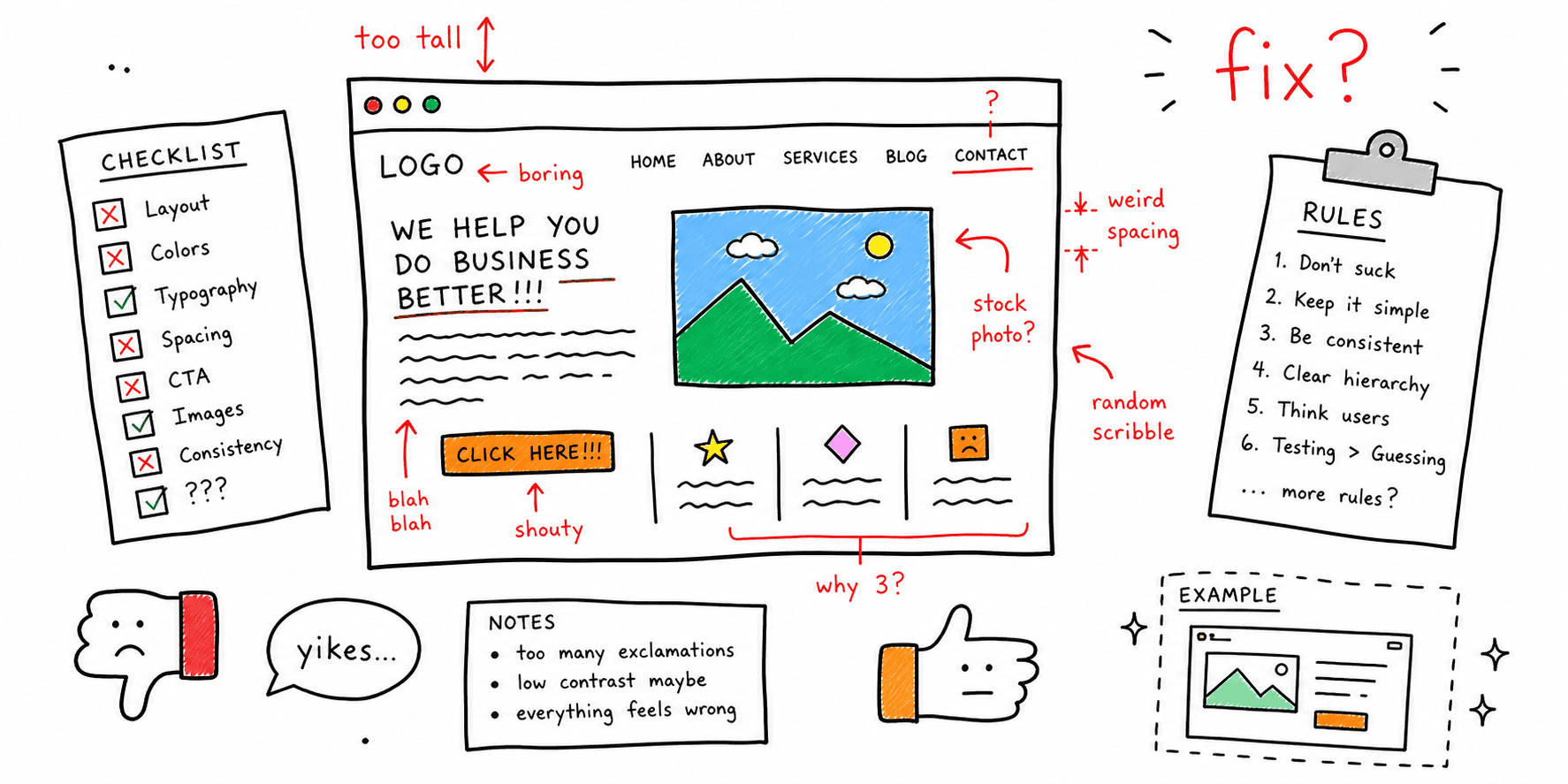

Design critiques create shared language for feedback and decisions. This template helps teams review work consistently and turn feedback into next steps.
What you'll get:
- A design critique checklist
- A copy/paste design critique template
- Critique rules that keep feedback useful
- A simple example you can reuse
Use the sections below as building blocks; keep what you need and delete the rest.
For a structured audit pass, use the heuristic evaluation template.
References for this guide are listed at the end.
What is a design critique?
A design critique is a structured conversation that evaluates whether a design meets its objectives. It is not about judging the designer. It is about improving the work.
Design critique vs design review
Nielsen Norman Group distinguishes critiques from design reviews:
- Critique: Improve the work through conversation and feedback.
- Design review: Evaluate a design against heuristics or approval criteria.
When to run a design critique
Design critiques can happen at any stage and should be repeated as the design evolves. They are especially valuable early, when changes are cheap.
Roles in a critique
A critique works best when roles are clear:
- Presenter: Provides context, goals, and walkthrough
- Facilitator: Keeps the discussion on track and on time
- Note-taker: Captures insights and actions
- Critiquers: Provide feedback tied to goals
Critique rules that keep feedback useful
Use these rules to prevent opinion wars:
- Link feedback to user or business goals
- Ask questions before giving solutions
- Be specific (what, where, why)
- Avoid directives and personal preferences
Design critique checklist
Before the critique
- Define the scope (one flow, one screen, one goal)
- Share context and objectives in advance
- Explain what feedback is needed
- Assign presenter, facilitator, note-taker
During the critique
- Walk through the design from the user start point
- Keep discussion inside scope
- Capture questions and risks
- Timebox each contributor
After the critique
- Summarize decisions and actions
- Assign owners and deadlines
- Share notes with the team
Design critique template (copy/paste)
Critique brief
| Section | Details |
|---|---|
| Design objective | What should this design achieve? |
| Target user | Who is this for? |
| Key task | What should the user be able to do? |
| Constraints | Time, tech, business limits |
| What feedback I need | Ex: clarity of flow, hierarchy, CTA |
| Out of scope | Ex: colors, brand refresh |
Feedback log
| Area | Observation | Goal impacted | Question | Severity | Next step |
|---|---|---|---|---|---|
| Onboarding | Step 2 feels long | Activation | Can we shorten? | Medium | Try 1-screen version |
Example critique prompt
Goal: Increase trial signups.
Scope: Signup flow only.
Questions:
- Is the primary CTA obvious?
- Is the value proposition clear in 5 seconds?
- Are there any steps that feel unnecessary?
Tips for better critiques
These habits reduce friction and improve outcomes:
- Explain the problem before showing solutions
- Share a brief ahead of time
- Start where the user starts
- Invite cross-functional feedback
Use a design critique template
If you want a ready-made board, tools like Miro provide a critique template you can adapt.
Common critique pitfalls
Avoid these patterns:
- No shared objectives
- No scope
- Turning critique into a debate
- Jumping to solutions too early
References
- Nielsen Norman Group — Design Critiques
- Smart Interface Design Patterns — Design Critiques
- Miro — Design Critique
- Toptal — Productive Design Critique Guide
Related resources
- UX expert review checklist
- Heuristic evaluation template
- Cognitive walkthrough template
- Usability testing template
- Website UX best practices
If you want a fast UX audit for a specific page, start here: Website UX Audit
Want client-ready UX findings in minutes? Roast My Web generates branded PDF audit reports with prioritized UX, conversion, and SEO fixes.